The Ideal Grit Progression for Repairing Microchips on Hard Carbon Steel Knives
You look down. There's a notch. Your heart sinks. But here's the thing: a microchip on a hard carbon steel knife isn't a death sentence. It happens. You hit a bone, a seed, or something nasty lurking in the cutting board. The first step isn't grabbing a stone. It's grabbing a loupe. Actually, even a cheap magnifying glass works. You need to see the damage. Is it a true chip or just a rolled edge? Hard carbon steel is brittle. It doesn't bend; it bites. So when it fails, it fails hard. Roll your thumb across the edge gently. Feel for the catch. If there's a gap, you've got work to do. If it's just a burr, you're in luck. But let's assume it's a real chip. Deep breath. We can fix this.
The Heavy Lifter: Starting Coarse
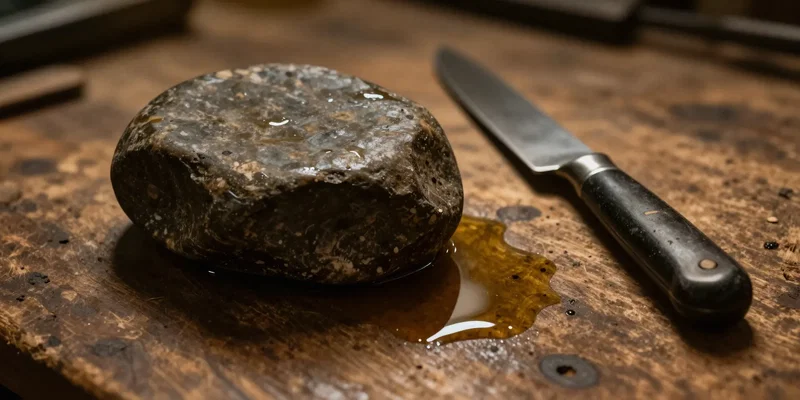
This is where most people mess up. They start too fine. They think, "I'll just polish it out." Nope. A microchip is missing steel. You can't polish what isn't there. You need to remove steel. Fast. That means a coarse stone. Think 120 grit. Maybe 220 if the chip is tiny. Hard carbon steel can take the abuse. It has the carbide volume to handle aggressive abrasion without turning into a mushy mess. Use a coarse water stone or a diamond plate. Keep the knife flat. Grind the entire edge down until the chip disappears. Yes, you are shortening the life of your knife. But a chipped knife is a dead knife anyway. The goal now is resurrection, not preservation. Grind until the edge is one continuous line. No dips. No shadows. Just steel.
Bridging the Gap: The Medium Grind
Now you've got a blunt, chipped-free edge. It looks like a butter knife. Good. Time to build a bevel. Move to a medium grit. Something between 400 and 800. This is the bridge. You're not removing massive chips anymore. You're shaping the apex. Hard carbon steel loves a good medium stone. It bites into the abrasive, gives you feedback, lets you feel the steel surrendering. Keep your angle consistent. If you're freehanding, pick an angle and lock your wrist. Microchips often happen because the edge was too thin and brittle. So during this stage, consider establishing a slightly more robust bevel. A little thicker behind the edge. A little more steel supporting the apex. It won't slice tomatoes like a laser, but it won't chip when you look at a chicken bone wrong.
Hard Carbon's Sweet Spot: The Refinement Phase
Here is where hard carbon steel shows its personality. It doesn't need to go to 10,000 grit. It really doesn't. A good progression stops around 1,000 to 3,000 grit for most kitchen tasks. Anything higher is vanity. After your medium stone, jump to 1,000. Polish out the scratches from the 400-grit stage. Then, if you want, touch it up on a 3,000-grit finisher. The edge will be toothy enough to grab a tomato skin but refined enough to glide through paper. Hard carbon steel forms a wicked burr. You'll feel it. When you do, switch sides. Alternate strokes. Light pressure. Let the stone do the work. Don't force it. Actually, this is the most relaxing part. The chaos of the chip is gone. Now it's just you, the steel, and the slurry.
Stropping and the Final Check
You're almost there. But don't stop at the stone. Grab a strop. Leather. Compound. No compound. Whatever you have. Stropping isn't just for straight razors. It aligns the edge. It cleans off that final, stubborn burr. Twenty passes per side. Light. Like you're brushing a cat. Then test it. Don't do the stupid thumb test. Use paper. Use a tomato. Use the hair on your arm if you're feeling brave. The edge should bite immediately. No sawing. If it hangs up, go back to the 1,000-grit stone for a few passes. Then strop again. Hard carbon steel takes a screaming edge if you respect the progression. Coarse to medium to fine. Skip a step, and the microchip comes back to haunt you. Do it right, and your knife is back from the dead. Better than before.