12 Degrees vs 15 Degrees per Side: Which Edge Lasts Longer in Real Cooking?
Everyone and their grandmother wants a "laser" these days. Twelve degrees. Fifteen degrees. We measure this stuff like we're splitting atoms. But here's the thing: most home cooks couldn't tell the difference blindfolded. And that's fine. The real question isn't which angle cuts paper straighter in a YouTube demo. It's which one survives Tuesday night dinner when you're hacking through a butternut squash and pretending you know what you're doing.
Geometry 101 Without the Math Headache
Fifteen degrees per side means thirty inclusive. Twelve means twenty-four. Smaller number, thinner edge, less metal behind the blade. Think of it like a razor versus an axe. One whispers through onions. The other doesn't freak out when it hits a chicken bone. But most kitchen knives aren't doing just one job, are they? They're slicing bell peppers at noon and smashing garlic at six. That split personality matters. A lot.
The 15-Degree Workhorse
This is where I'd put my money if I could only pick one. Fifteen degrees gives you enough bite to feel sharp but leaves enough meat on the edge to forgive your sins. Hit a tiny bone in that chicken thigh? It'll probably shrug it off. Forget to debone the salmon properly? You might get away with it. The edge retention is just better in real cooking because the edge isn't constantly rolling over or chipping out. It stays "good enough" longer. And good enough is what actually matters when you're three beers into a dinner party prep.
The 12-Degree Trap
Twelve degrees is sexy. I'll admit it. It glides through a tomato like the skin isn't even there. But it's a diva. Harder steels can handle it—your ZDP-189, some powdered metallurgy stuff. Try it on a softer German stainless and you're asking for rolled edges within a week. In real cooking, with real boards that aren't end-grain perfect, and real plates that sneak under your knife, twelve degrees gets chewed up. Fast. You spend more time stropping than cooking. Nobody wants that.
Steel Type Flips the Script
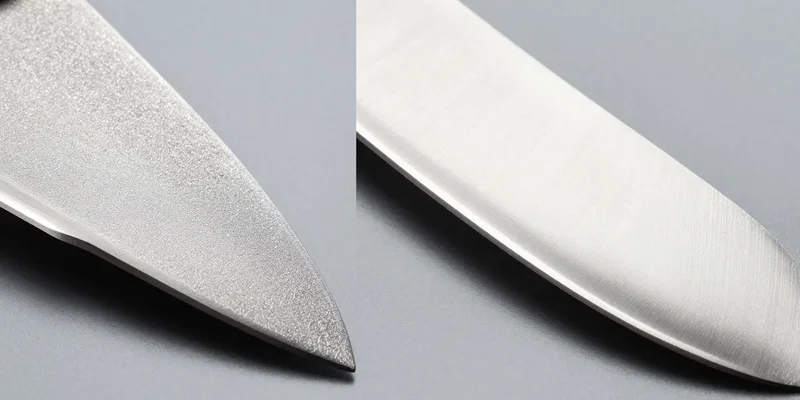
People love comparing angles in a vacuum like steel doesn't exist. But it does. A fifteen-degree edge on hard Japanese steel can outperform a twelve-degree edge on soft stainless. Rockwell hardness matters more than your sharpening obsession wants to admit. Harder steel holds a steeper angle. Softer steel needs more support. So if you're running fifteen degrees on 61 HRC steel, you might actually get better edge retention than twelve degrees on 56 HRC. Angle isn't everything. It's just the number we argue about online.
Just Sharpen It and Move On
Pick fifteen degrees if you're normal. Pick twelve if you're chasing perfection and don't mind touching up your edge every other day. The difference in edge retention in real cooking heavily favors the wider angle unless you're running premium steel and cutting nothing but vegetables on soft boards. Most of us aren't. Most of us just want a knife that cuts and doesn't make us baby it. Get a good stone. Learn to sharpen freehand. Stop overthinking two degrees. Your dinner won't care.