Soy Wax Melt Point Explained: Why Temperature Changes Everything
Let's get straight to it. Your soy wax melt point isn't just a suggestion printed on the back of the bag. It’s the literal baseline for every single candle you make. Think of it as the wax’s personality. Some waxes melt at 115°F. Others hold out until 125°F. Miss that window? Your candle is going to look like a cratered moon. Getting the temperature right from the jump changes everything about how your fragrance binds and how smooth those tops dry.
Candle Making Science: What Actually Happens in the Pot
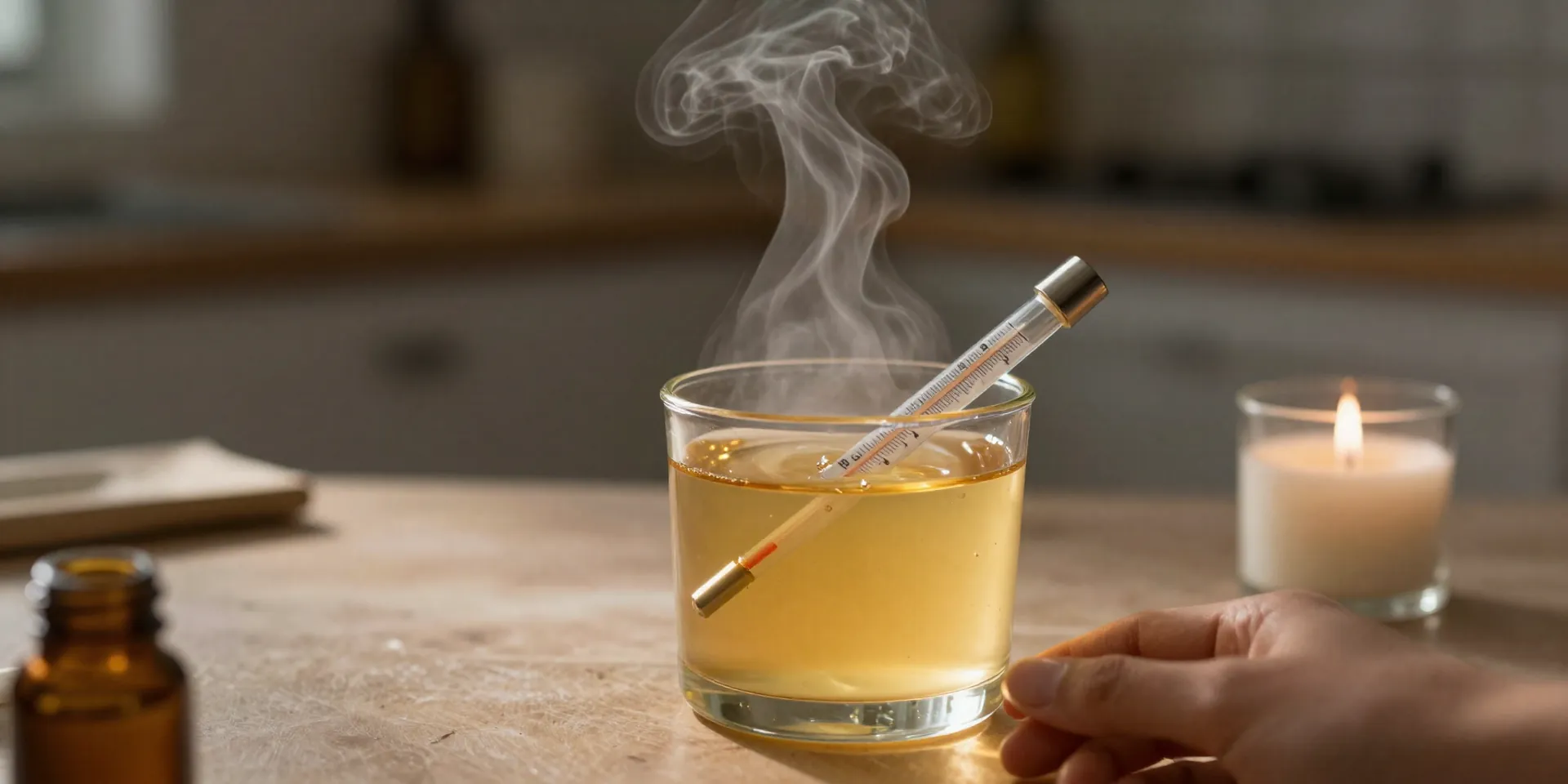
Here's the thing. When you heat soy wax, you're breaking down crystalline structures. Sounds super nerdy, right? But this is basic candle making science. If you blast the heat and push the wax way past its melt point, you stress the oil out. You scorch it. Melt it too slowly or pull it off the heat too soon, and those crystals never fully dissolve. You end up with a clumpy, cloudy mess that throws absolutely zero scent when lit.
Melt Point vs. Pour Temperature: The Rookie Mix-Up
Don't confuse the melt point with your pour temperature. Seriously. I see this mistake daily. Your soy wax melt point is when the flakes turn to liquid. Your pour temp is when that liquid cools down enough to go into the jar without shrinking away from the glass. You need to melt the wax, add your fragrance at a specific candle temperature (usually around 185°F), and then wait. Patience is non-negotiable here. Pour too hot, and the wax cools too fast. That's exactly how you get ugly sinkholes.
Soy Wax Basics: Beating the Frosting Problem
You poured your candle. It cooled. Now it looks like it has a weird white rash on the glass. That's called frosting. It's the hallmark of natural soy wax trying to return to its natural state. You can't completely stop it. But mastering your soy wax basics and managing your temperatures dramatically reduces the ugly factor. Preheating your jars helps. Pouring closer to the wax's actual melt point rather than a piping hot temperature slows down the crystallization. It's a massive balancing act.
Room Temperature is the Invisible Ingredient
Everyone obsesses over the melting pot. Nobody looks at the thermostat. If your kitchen is freezing, your wax is going to cool way too fast the second it hits the jar. If it's a humid summer day, the wax takes forever to set up. You have to adapt. If the room is cold, bump your pour temperature up by a couple of degrees. If it's hot, drop it. Your environment dictates how the soy wax behaves just as much as the burner does.